



When British manufacturing began to collapse.
By the 1970s, Britain’s manufacturing confidence had begun to fracture. Mills closed across Lancashire. Synthetic fibres overtook traditional cloth. The Three-Day Week exposed the fragility of industrial Britain, while cheap imports and mass production accelerated the decline of domestic manufacturing. Across Manchester and the North West, factories that had operated for generations began to disappear.

At the beginning of the decade, more than 70,000 people still worked in Manchester’s clothing trade. Entire districts of the city were built around garment making, rainwear, cutting rooms and pressing floors. But the decline came quickly.
The blistering summers of 1975 and 1976 badly affected Britain’s rainwear industry. By the end of the decade, much of the infrastructure that had defined industrial Manchester had already begun to disappear.
Yet the work continued.
The blistering summers of 1975 and 1976 badly affected Britain’s rainwear industry. By the end of the decade, much of the infrastructure that had defined industrial Manchester had already begun to disappear.
Yet the work continued.
While much of the industry moved towards speed, scale and disposability, some workshops refused to compromise. Cloth was still cut properly. Garments were still stitched with patience and precision. Skilled cutters, machinists and pressers continued to practise trades increasingly viewed as inefficient in a changing world.
Manchester remained central to that tradition. Once known as ‘Cottonopolis’, the city had built its global reputation on textile engineering, manufacturing discipline and industrial scale. At its peak, Manchester processed more cotton than the rest of the world combined. By the late 1970s, much of that infrastructure had vanished, but fragments of that knowledge still survived behind factory doors.

The cloth itself reflected the divide emerging across British manufacturing. Polyester and synthetic blends came to dominate much of the decade, prioritising cost and convenience over longevity.
But in specialist outerwear manufacturing, structured natural cloth retained its authority. Wool meltons, expertly woven either side of the Pennines, continued to provide protection and weight. Ventile from Chorley remained unmatched for breathable weather resistance. Durable cottons still mattered where performance mattered.
But in specialist outerwear manufacturing, structured natural cloth retained its authority. Wool meltons, expertly woven either side of the Pennines, continued to provide protection and weight. Ventile from Chorley remained unmatched for breathable weather resistance. Durable cottons still mattered where performance mattered.

Much of that cloth still comes from the same regions that shaped Britain’s textile identity. Woollens from Yorkshire. Knitted cashmere from Elgin. The wider industry changed around them. The geography remained remarkably intact.

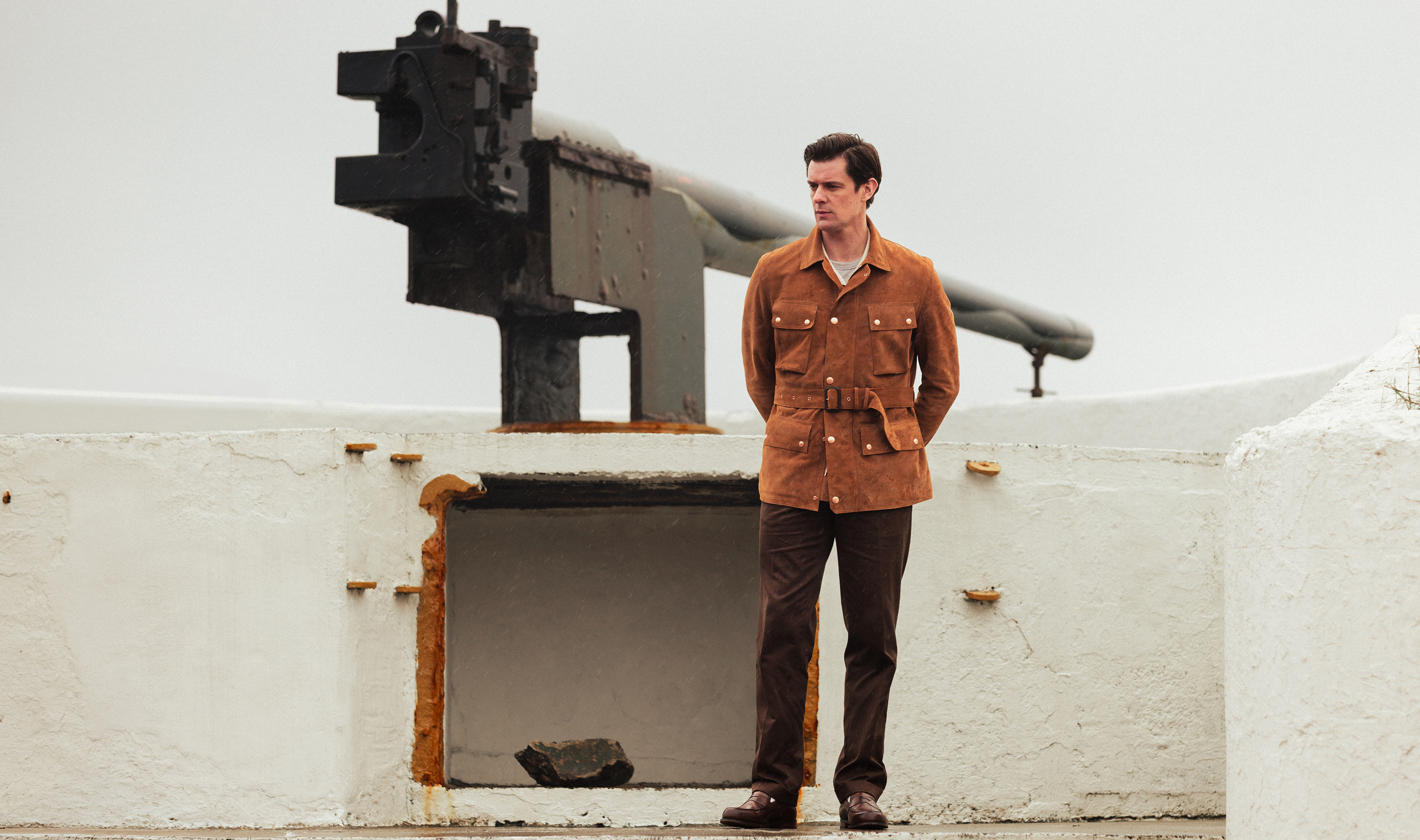
The garments themselves also endured. The Harrington retained the clean utility of the post-war blouson. The Peacoat continued to carry the weight and protection once relied upon by Royal Navy servicemen operating in freezing seas and hostile conditions. The Despatch Rider’s Trench preserved the discipline of military rainwear developed for Allied despatch riders during the Second World War. The Flight Jacket maintained the functional clarity of aviation outerwear originally engineered for RAF and Allied aircrew operating at altitude in extreme conditions.


These were not garments designed around trend or seasonality. They were built around protection, structure and longevity. Utilitarianism remained. Discipline remained. So did the expectation that clothing should endure.

Our Managing Director, Mike Stoll, began working in the factory in March 1972, fresh from Hollings College. His father, Alec, now 93 and showing little sign of slowing down, worked directly for Jack White V.C. himself. Few industries retain continuity like that. Fewer still retain it under one roof in Manchester.
Mike has spent more than five decades swimming against the tide, refusing to compromise as the wider industry contracted around him. Others closed. Others outsourced. Others disappeared.
Mike has spent more than five decades swimming against the tide, refusing to compromise as the wider industry contracted around him. Others closed. Others outsourced. Others disappeared.

The factory endured because the people inside it remained steadfast in their refusal to lower the standard. That same resilience, discipline and determination still defines the work today.
It is why we are still standing.
It is why we are still standing.


Leave a comment
This site is protected by hCaptcha and the hCaptcha Privacy Policy and Terms of Service apply.