



The 1940s were a defining decade for Britain.
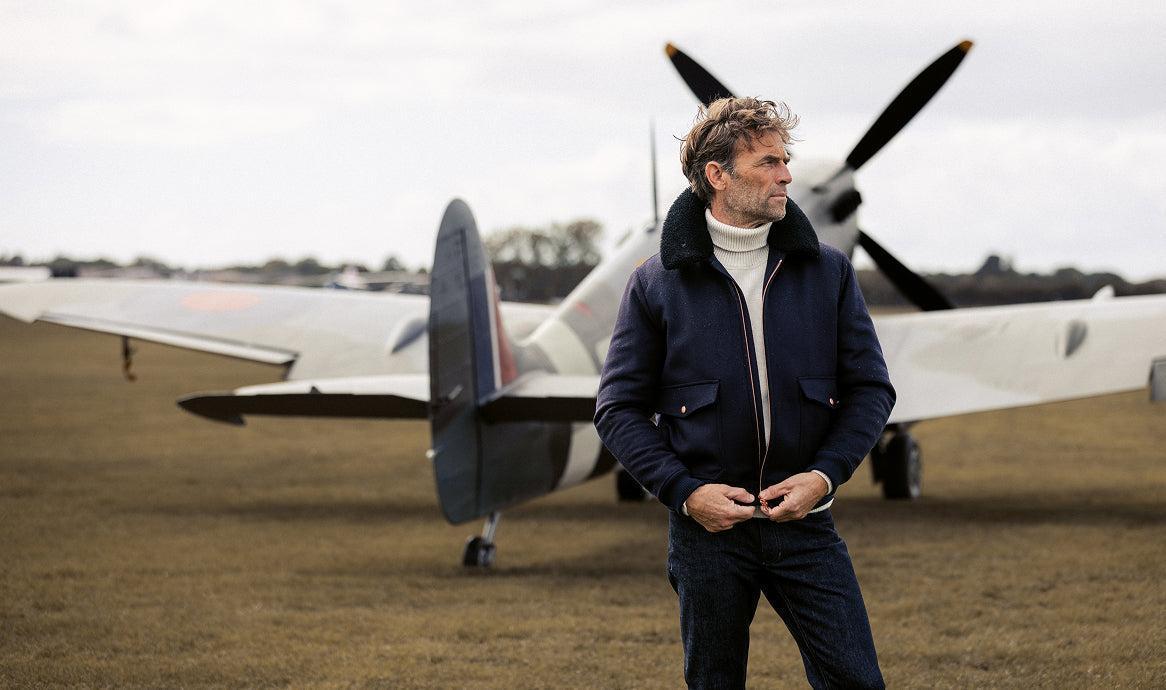
Under the leadership of Winston Churchill, the nation mobilised its factories, mills, research institutes, and workers in a collective effort to withstand the pressures of war. In the air, the Royal Air Force faced some of the most perilous conditions of the conflict.

Pilots operating over the North Atlantic and Arctic seas knew that if their aircraft were hit, the bitter water temperatures would give them less than ten minutes to survive. It was in this crucible of necessity that one of the most remarkable British textile innovations was born.
Manchester became central to the search for a solution. The Shirley Institute, located in Didsbury just six miles south of the city centre, stood at the heart of Britain’s textile research. Its position was no accident. Surrounded by the mills, dye houses, and garment factories that powered the North West’s industrial might, the Institute sat fortuitously close to the very sewing rooms that would decades later house Private White V.C. and many other manufacturers supporting the war effort.

Churchill’s Air Ministry tasked the Institute with developing a material capable of protecting pilots without relying on rubber or heavy coatings. The brief was simple in principle, complex in reality. The new cloth had to be breathable, windproof, water resistant, flame resistant, and able to perform in the harshest conditions on earth.
The breakthrough came in 1943. Researchers at the Shirley Institute engineered a fabric woven from extra-long staple cotton yarns at an exceptionally high density. When dry, the cloth remained breathable and flexible. When exposed to water, the fibres swelled and locked together, creating an almost impenetrable barrier. The material was named Ventile®, a quiet triumph of British research and engineering.

Ventile® was quickly adopted for RAF immersion suits and survival smocks used by pilots flying hazardous missions over freezing seas.


The impact was immediate and profound. Survival rates rose, and Ventile® became known as a fabric that saved lives. After the war, its reputation spread to explorers, naturalists, naval deck crews, and specialist military units who required clothing capable of withstanding the most unforgiving climates on earth.
Today, Ventile® remains one of the purest and most technically accomplished cotton fabrics ever produced. At Private White V.C., it holds a special place in our collection.


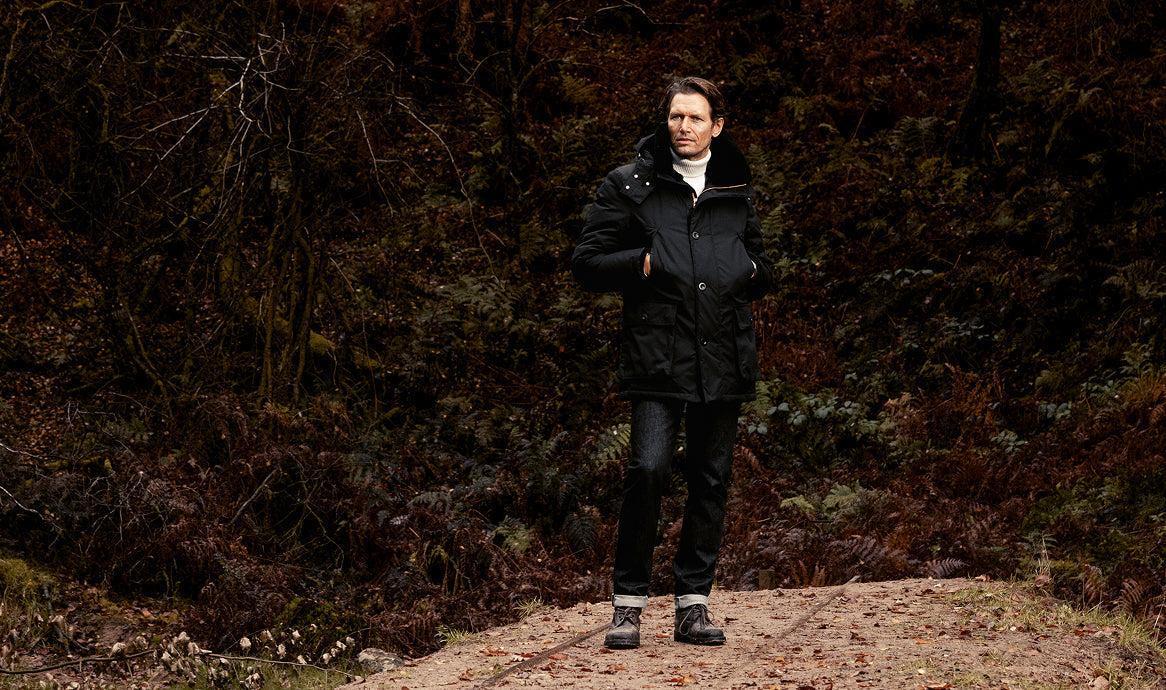
From our Jack’s Mac to our Field Agent and Shadow Parka, we continue to craft garments using the same principles that defined the fabric’s wartime origins. Precision, performance, and British ingenuity lie at the heart of every piece.

The 1940s chapter is a tribute to that spirit. Ventile® stands as a testament to the resilience of a nation and the brilliance of its craftsmen, a material born out of necessity, carried forward through craft, and still cut and sewn in Manchester a century later.


Leave a comment
This site is protected by hCaptcha and the hCaptcha Privacy Policy and Terms of Service apply.